Gut Jobs and Tear-Outs
Tuscaloosa Demolition Pros: Interior Demolition in Tuscaloosa, AL
Before a remodel starts, the old kitchen, the bathroom tile or the plaster walls have to come out, and that is a demolition job of its own.
- Tuscaloosa, Northport and towns within 20 miles
- Licensed, insured local contractors
- Houses, mobile homes, garages and pools
- Written price before work starts
- Debris hauled and the lot graded
Tuscaloosa Demolition Pros connects Tuscaloosa homeowners, landlords and remodelers with local crews who handle interior demolition: tearing out kitchens and bathrooms, pulling plaster and lath, removing flooring and ceilings, and gutting whole houses to the studs. This page covers what interior demo costs, the permit the City of Tuscaloosa requires for remodels, and the asbestos, lead paint and load-bearing wall questions to answer before the first wall opens.
A structural engineer's visit before a wall comes out is a small bill next to the $4,000 to $10,000 HomeGuide gives for partial demolition of a load-bearing wall, which is where a guessed-at gut job can end up.
Interior Demolition for Tuscaloosa Remodels
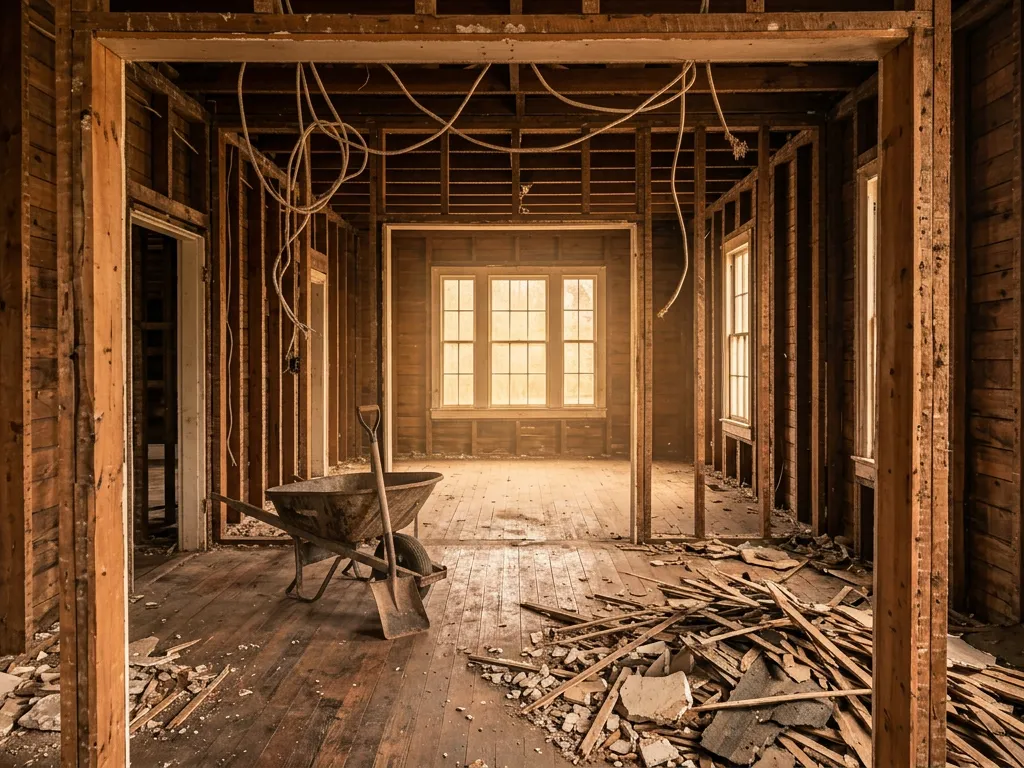
Interior demo is the tear-out that comes before new work: cabinets, counters and tile in a kitchen, a tub and vanity in a bathroom, carpet and old flooring, drop ceilings, plaster and lath, and sometimes every wall down to the studs and board sheathing. Tuscaloosa has a deep stock of houses where that is the starting point. Some 42.2% of the city's housing units were built before 1980, and 57.1% of homes are renter-occupied, so both older-house remodels and rental turnovers begin with a crew, a wheelbarrow and a dumpster in the driveway.
What Interior Demolition Costs in Tuscaloosa
$1,000 to $5,000
HomeGuide's 2026 interior demolition cost guide range, which works out to $2 to $8 per square foot. A kitchen alone runs $500 to $2,500 and a bathroom $600 to $2,000.
HomeGuide prices interior demolition at $2 to $8 a square foot, or $40 to $80 an hour for a contractor on smaller jobs. Where yours lands depends on what comes out: carpet and drywall go quickly, plaster and lath are heavy and dusty, and tile set in a mortar bed takes longer than tile on backer board. A roll-off for the debris is often part of the quote; ask whether it is. Older houses can add testing first, and HomeGuide puts a lead-paint test at $160 to $700 and an asbestos inspection at $300 to $900.
Load-Bearing Walls in a Gut Demo
Opening up a floor plan is where interior work gets complicated. A wall that carries the roof or a floor above cannot simply be knocked out; a structural engineer should say what will carry the load instead, and the beam or posts go in before the wall comes out. HomeGuide puts partial demolition of a load-bearing wall at $4,000 to $10,000. The contractor who quotes your job should ask about this up front, and so should you. Plumbing, wiring and gas lines inside the walls need to be shut off and made safe by the right trade before demolition.
Tuscaloosa Permits and Asbestos Rules for Interior Demo
The City of Tuscaloosa says permits are required for all new construction, demolitions, remodel and alterations, so a gut job inside the City needs a permit even when the outside never changes. Its residential forms ask for an Alabama Home Builders License number on projects over $10,000, and work begun before the permit pays a doubled fee. Debris has to reach a lawful disposal area under Sec. 16-101. ADEM's asbestos rules exempt privately owned homes of four or fewer units, but ADEM warns the exemption can put homeowners at risk, so test old floor tile, ceiling texture and pipe wrap before tearing them out.
Interior Demolition in Vance and Nearby Towns
Outside Tuscaloosa, each city runs its own permits. For interior demolition in Vance, the city has a Chief Building Inspector and takes permit applications online. Vance also has the newest housing in the area, with a median year built of 2005 against 1988 in Tuscaloosa, so the testing questions above come up more often in the older city neighborhoods.
Signs It Is Time for a Full Gut
- Plaster is cracked and falling away from the lath
- Water damage has reached the subfloor or the wall framing
- The kitchen and bath are original and nothing is worth keeping
- Old wiring or plumbing has to be replaced inside every wall
- The floor plan needs walls moved, not just new finishes
Plan Interior Demo in Tuscaloosa
Describe the rooms, what is coming out and the age of the house, and a local contractor follows up with a written price for the tear-out and hauling.
Call (205) 590-9261Interior Demolition Available In
Frequently Asked Questions
Interior Demolition Questions From Tuscaloosa Owners
How much does interior demolition cost in Tuscaloosa?
HomeGuide's 2026 guide puts most interior demolition at $1,000 to $5,000, or $2 to $8 a square foot. A kitchen tear-out runs $500 to $2,500 and a bathroom $600 to $2,000; plaster, mortar-set tile and a load-bearing wall push the number up.
What are the signs a house needs a gut renovation instead of updates?
Plaster failing in several rooms, water damage in the framing or subfloor, wiring and plumbing that must be replaced throughout, and a layout that only works with walls moved. When most surfaces have to come off anyway, a full gut is often simpler.
Do I need a permit for interior demolition in Tuscaloosa?
Inside the City, yes. Tuscaloosa states that permits are required for remodel and alterations as well as demolitions, and starting work before the permit is issued doubles the fee. Outside the City, ask that town's building office.
Can a load-bearing wall come out during demo?
Only with a plan. A structural engineer should size what replaces the wall, and the new support goes in before the wall comes out. HomeGuide puts partial demolition of a load-bearing wall at $4,000 to $10,000, so price it apart from the rest of the tear-out.
Should I test for asbestos and lead before interior demolition?
In an older house, yes. HomeGuide puts an asbestos inspection at $300 to $900 and a lead-paint test at $160 to $700. ADEM exempts most private homes from its asbestos rules, but it also warns that the exemption can leave homeowners at risk.