Tuscaloosa Demolition Pros: What to Expect on Demolition Day in Tuscaloosa
Tuscaloosa Demolition Pros connects owners around Tuscaloosa with local demolition contractors, and after price the next question is nearly always what the process looks like. Here it is in order: the first call and site visit, the written price, the utility shutoffs and 811 marks, the machines, the teardown, the haul, and a walk around the graded lot. A given contractor's sequence may differ in detail; the rules named below do not.
The First Call and the Site Visit
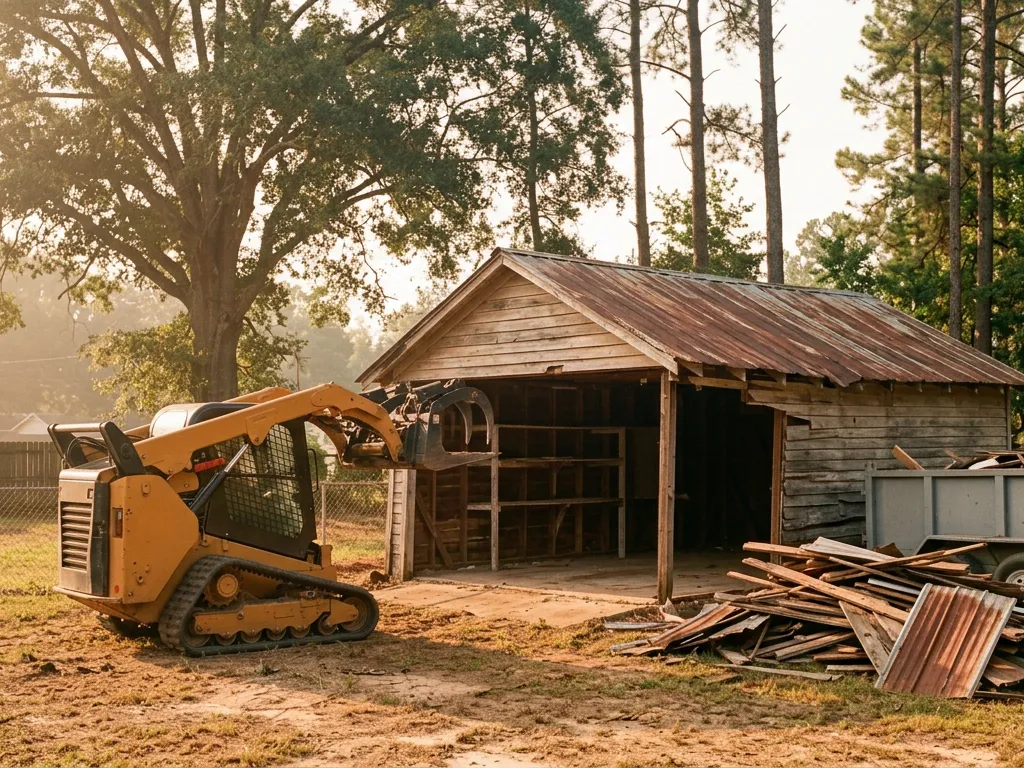
The first call covers the basics: the address, what is coming down (a house, a mobile home, a garage, a pool), and anything that stays. Then the contractor who quotes your job walks the lot. Expect questions about the foundation, whether slab, pier and beam or crawlspace, how a loaded truck gets in and out, trees close to the walls, and whether the house is on City sewer or a septic tank.
Have the year the house was built ready, along with a list of anything you want to keep: a mantel, doors, old brick. That is salvage, and it comes out before any machine starts.
A Written Price That Names Every Step
A good written price reads like this article in miniature. Look for the demolition permit, each utility disconnect, the 811 locate, any asbestos inspection, hauling and disposal, removal of footings, piers and slab, and the final grade. Anything missing from the paper is not in the price.
Inside the City of Tuscaloosa the residential demolition permit is $21.00. The online application asks for a City business license number and, on projects over $10,000, an Alabama Home Builders License number. A demolish-and-rebuild needs a New Construction permit as well, so ask whose name goes on each one.
Shutting Off Power, Gas, Water and Sewer in Tuscaloosa
Every utility comes off before the structure comes down. The power company takes the electric disconnect; across most of the area that is Alabama Power, whose business service center handles disconnect requests. The gas utility takes its own request, and City of Tuscaloosa Water and Sewer handles the water. HomeGuide puts utility termination inspections at $100 to $150 each.
Sewer is its own step in Tuscaloosa. Code Sec. 6-12(d) holds the demolition permit until the City approves a cap on the sewer lateral in its easement and a locator plate on it. In Northport, electric, gas and water are City of Northport services, so all three disconnects go through Northport's own applications.
Notices, Then Paint and Flags From Alabama 811
Next come the notices. For a regulated structure, such as a commercial building, an apartment building of more than four units or a house cleared as part of a larger project, ADEM wants a Form 496 notice through its AEPACS system 10 days before demolition. A privately owned house of four or fewer units that stays residential is exempt.
Every job gets an Alabama 811 request, placed between two working days and 30 calendar days ahead of the start. The call is free, and each utility sends its own locator to mark buried lines. Expect colored paint and small flags in the yard. Leave them alone until the job is finished.
Ready to see your own sequence? Share the address and what is coming down, and a local contractor walks the lot and writes up the steps and the price.
Call (205) 590-9261The Machines on a Tuscaloosa Teardown
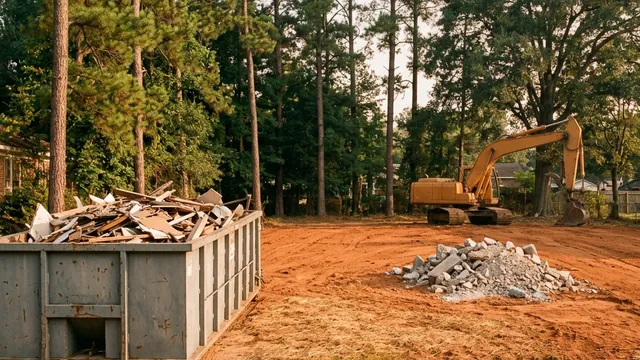
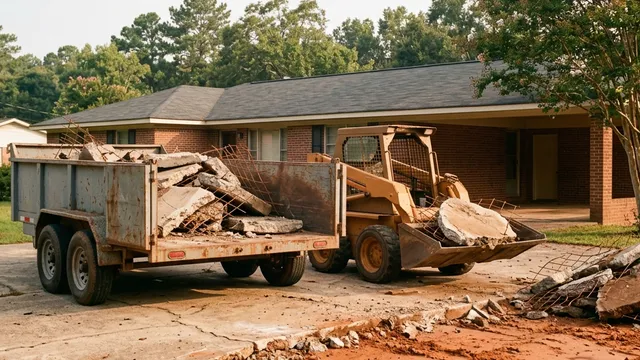
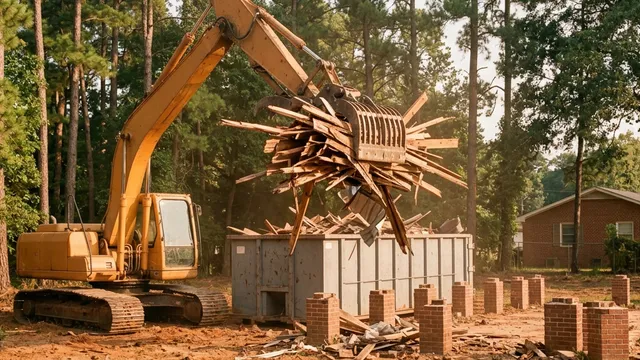
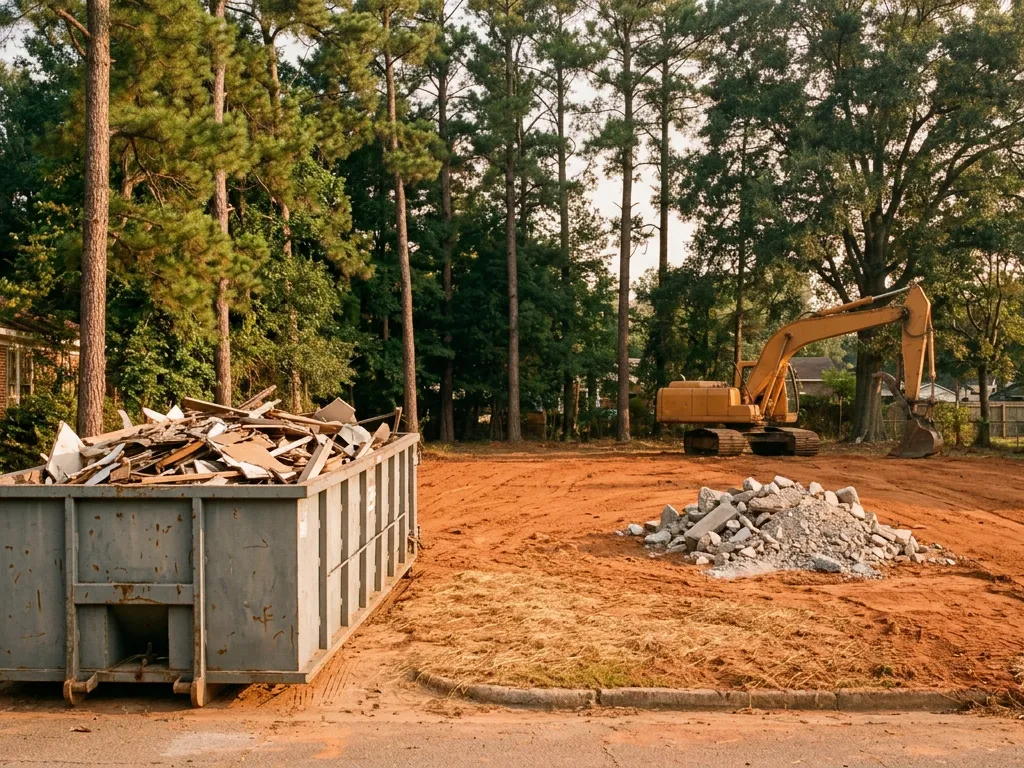
A typical house teardown brings three kinds of equipment: an excavator with a grapple, which grips, pulls and loads the structure; a skid steer or compact track loader to push debris, break up flatwork and feed the pile; and roll-off containers or trucks for the haul. A roll-off set in the street needs a right-of-way permit, and the City has an Off-Site Dumpster Permit Application for it.
On lots in the watersheds of Lake Tuscaloosa, Harris Lake or Lake Nicol, the City asks for a Site Stabilization Plan, so ask whether silt fence along the low side is part of the job.
Salvage First, Then Structure, Footings and Slab
The teardown runs in a fixed order. Salvage and scrap metal come out first: what you asked to keep, then metal a scrap yard will take. Next the excavator brings the roof and walls down, and the grapple sorts framing into the roll-off. With the house gone, the crew pulls brick piers and digs out footings, then breaks the slab, separating rebar and wire mesh as scrap.
Inside Tuscaloosa that slab has to go: Sec. 6-51(d) requires abandoned slabs, foundations and driveways removed where no primary structure remains. A septic tank is pumped by an AOWB-licensed pumper, then removed or filled with sand or soil.
Hauling Debris to the County's Disposal Facility
Tuscaloosa's code makes whoever demolishes a building take the debris "to a lawful disposal area." ADEM classes demolition debris as regulated solid waste, while uncontaminated concrete, brick, block, asphalt and soil are not, which is why clean rubble is often kept apart from framing. The Black Warrior Solid Waste Disposal Facility near Coker, run by an authority the City formed in 1994, serves Tuscaloosa County. Asbestos material may go to a permitted landfill only with ADEM's written approval.
Inside the City, Sec. 6-12(e) wants the debris off the site 30 days after the structure is down. For roll-off sizes and weekly rates, see demolition debris removal.
Grading, Seeding and the Final Walk-Through
Holes left by footings, piers and any tank get filled and compacted, and the lot is graded to drain. HomeGuide puts grading at $0.50 to $5.00 per square foot and backfill at $3 to $6 per cubic yard. Topsoil and seed finish the lot when the price includes them. Then walk it with the contractor and check:
- Slab, piers, footings and driveway gone, as the contract says
- Sewer lateral capped, with the locator plate set
- Fill compacted and the ground sloped away from neighbors
- Seed or straw down where the price included it
- Disposal receipts for every load that left
The machine work is loud and short; the steps around it are where a careful contractor earns the job. For the calendar, read how long house demolition takes, and before you sign, go through the house demolition mistakes owners make most often.
Want a number for your own lot? (205) 590-9261
Frequently Asked Questions
Demolition Day in Tuscaloosa: Questions Owners Ask
Do I need to be there on demolition day?
It helps to walk the lot with the contractor before work starts, to point out trees, fences or salvage that stay, and again at the end for the final walk. In between, the site belongs to the machines, so keep people and pets well clear.
Who turns off the utilities before a house is demolished?
Each utility takes its own disconnect request: the power company, the gas utility, and City of Tuscaloosa Water and Sewer. Inside Northport all three are City of Northport services. Tuscaloosa also requires the sewer lateral capped before it issues the permit.
What equipment is used to demolish a house?
Usually an excavator with a grapple to pull the structure apart and load it, a skid steer or compact track loader for cleanup and flatwork, and roll-off containers or trucks to haul the debris to a disposal facility.
Where does demolition debris go in Tuscaloosa County?
To a lawful disposal area. The Black Warrior Solid Waste Disposal Facility near Coker serves the county. Clean concrete, brick, block and soil are not regulated solid waste under ADEM's rules, so crews often keep them apart from framing.
What should the lot look like when the contractor leaves?
Inside Tuscaloosa, no slab, foundation or driveway remnants where no house remains, with the surface returned to a natural state under Code Sec. 6-51(d). Holes filled, the lot graded to drain, and seeding if your contract includes it.